

Richard Boehler
Born: 29 August 1888, Chicago, Illinois
Died: 01 August 1975, Chicago, Illinois
Blind from the age of ten, Richard Boehler overcame early adversity to build a rich and varied life centred around music, resilience, and resourcefulness. A Chicago native, he studied Braille at the Jacksonville school for the blind before enrolling at the Central College of Music in Chicago, where he trained under noted instructors Von Schiller and Edwin Schneider. Music ran in the family - his father Carl, a German immigrant, was also a musician.
In 1910, while living at the Industrial Home for the Blind in Chicago, Boehler met and married fellow resident Eugenia "Jennie" Martin, a talented singer who, like Richard, was blind. Their romance and marriage captured the attention of the local press. They made their home in the Holleadean Hotel, but their happiness was tragically brief: Jennie passed away in 1917 at the age of just 29.
Richard remarried in 1920 to Adeline Masterton, a blind vocal teacher, and together they forged a new life. After a brief period selling cigars, Boehler taught himself to play the organ, a skill that became essential as silent film theatres began replacing pianos with organs.
He gained recognition accompanying silent films at Chicago’s Famous Theatre, creatively syncing his performances to the on-screen action with the help of an assistant who sat beside him, tapping cues on his leg to match rhythms and moods—from marches to love scenes. In 1929, he was mugged and robbed, but remarkably identified his assailant by voice alone - a detail that helped secure a conviction.
By 1930, his career path had shifted; he worked as a peanut salesman before running a newspaper and confectionery stand inside the Chicago Federal Building by 1936. Despite health challenges in later life, both he and Adeline lived to a considerable age.
His talent was captured on record when he performed his own composition, Zema Valse, for QRS in 1914.
Victoria Boshko

Born: 7 August 1887, New York, NY
Died: 24 November 1977, East Hampton, NY
The daughter of Kapiton I. Boshko, a Russian-Greek sculptor and house decorator, Victoria Boshko carved out a remarkable musical career that took her from Europe’s cultural capitals to the American concert stage. She studied in Paris and Berlin from 1911 to 1914, and graduated from the Ethical Culture School, the Juilliard School of Music, and the Dresden Conservatory.
Her debut with the New York Philharmonic, under the baton of Walter Damrosch, was the stuff of legend: so petite that she became lost among the music stands, she fled the stage in tears - only for Damrosch to leave the podium, guide her back to the piano, and oversee a triumphant performance. She later performed for European royalty and had the distinction of playing the premiere concert at the then-new Hollywood Bowl.
By 1917, critics were describing her technique as “masterly,” praising her “masculine strength” and “stupendous chords.” In 1921, she was living at 362 Riverside Drive in New York, having lost contact with her father for three years—and, notably, trimmed five years off her age on her passport application! Her sister Nathalie was a violinist, and Victoria was also recognised as a talented painter.
Her personal life occasionally made headlines. A breach-of-promise suit against former Dallas mayor Colonel Henry Lindsey was followed by her marriage to her manager, Eugene Clement—born Herair Djidjian—an Armenian artist and theatre pianist who had arrived in the United States in 1921. Their daughter, Tamara, born in November 1928, would later gain recognition as a sculptor.
By 1936, Eugene had become a naturalised U.S. citizen and was working as an antiquarian and interior decorator. The couple divided their time between New York and Capri, Italy. Even in her late eighties, Victoria practised piano up to three hours a day. She often jokingly told friends her final wish was to give one last concert with full orchestra—and then die on the concert stage.
Joseph Bowman
Made at least one early hand-played roll (#100060 Vision of Salome Waltz). May be the same Joseph Bowman reported in Music Trade Review as owning a music store at 400 W. Madison St, Chicago in 1920.
The Burke Sisters
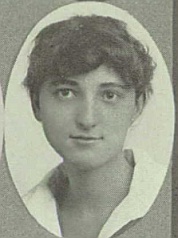
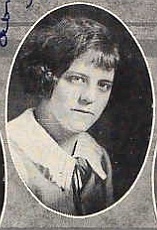
Lora Camilla Miller Burke
Born: 2 or 22 July 1899 Moberly, Missouri
Died: 5 June 1982 Moberly, Missouri
Carlotta Ann Burke Barth
Born: 24 July 1904 Moberly, Missouri
Died: 1 March 1969 Clanton, Alabama
Long thought yet another QRS house pseudonym, the Burke Sisters were very real people, and fascinating ones at that. Their sole roll, #3406 Je Vous Aime (I Love You), a ballad, was released in March 1926, and also offered as a Recordo expression roll.
Lora was the daughter of a German farmer who had arrived in the USA in 1854. He prospered and became a banker, purchasing a palatial manor that Lora lived in for much of the rest of her life. Her father passed away of cancer in 1916, and in October 1920 she was married to city attorney Edmund Burke. Her musical training had occurred at the Goetze Conservatory of Music in Moberly, and post-graduate at Saint-Marys-In-The-Woords in Terra Haute, Indiana and with Joseph Lhevinne at the American Conservatory of Music in Chicago and Ellsworth McLeod at the piano school of Fine Arts in Univeristy of Missouri.
She was also a prolific composer, including the Missouri State Song, and performed extensively on the concert stage and on radio with solo and duo-piano work, including being staff artist at NBC and making recordings for Brunswick. She appears to have started an act with Carlotta Burke around 1926, as they feature in various radio listings around that time.
In 1935, she reunited with Carlotta Burke as "The Original Burke Sisters", and performed Rhapsody In Blue as a piano/organ duet. The article mentions "Mrs. Burke and Miss Burke toured vaudeville stages several years ago". 1936 saw one of her biggest hits as a composer, I Gave My Heart To You, featured by such dance orchestra leaders as Abe Lyman, Jan Garber, and Joe Sanders. By 1942 she was a member of the Burke-Robertson piano duo team with Olivia Robertson. In the 1970s a local newspaper was given a tour of her beautiful house, including her music room, where her Steinway grand was still in daily use.
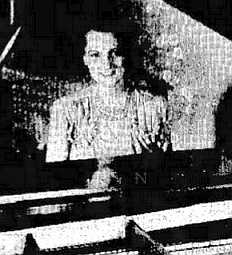
Carlotta, the daughter of an Illinois-born locomotive engineer of Irish ancestry, studied at Stephens College in Columbia, but resided in Moberly. She also briefly studied at the University of Southern California. Like Lora, she was an NBC staff artist for a time, playing from both New York and Los Angeles studios. An August 1926 radio listing shows her appearing with Lora Miller Burke as a piano duo, which is approximately the same time the roll was recorded, and also served as organist at a Sedalia theatre in 1929. In 1930 she was working as a theatre organist in South Sugar Creek, Missouri, and by 1938 she was working as a music teacher at public schools in Moberly, but resigned in 1939 to carry on her musical work. In March 1940 she married Milton C. Barth of Nashville, Tennessee and the couple relocated to Birmingham, Alabama. Milton died in 1958 aged just 48 in Clanton, Alabama where Carlotta stayed until her death - however, as late as 1961 she was still performing on a local Moberly radio station - advertised as 'Carlotta At the Baldwin - hear her at the console of the new model 46-P Baldwin Organ!'.
Clifford L. Carney
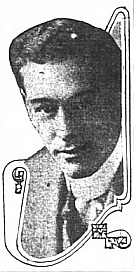
Born: 12 October 1887 Pittsburgh, PA
Died: 26 January 1923 Pittsburgh, PA
A flame-haired prodigy dubbed “The Little Paderewski,” Clifford Leon Carney was already making headlines as early as 1899, with reports that he was bound for Europe to continue his musical training. He graduated from the Pittsburgh Conservatory of Music in 1902 and married Nina on 28 February 1910.
Carney’s early musical career blended classical promise with popular appeal. By 1911, he was performing lively ragtime selections for audiences such as the Arcanum Lodge in Portland, where his “nimble fingers” and spirited piano playing won enthusiastic praise. During the 1910s, he gained recognition as the accompanist to popular vaudeville performer Bob Albright, and earned a reputation as one of the finest organists on the West Coast.
His versatility extended to recording work. He is credited as co-artist on QRS Autograph Roll #400062, a duet performance of The Last Rose of Summer (in chimes) with “Stanford Robar” (a pseudonym of Lee S. Roberts).
During World War I, Carney served as bandleader at the Great Lakes Naval Station, further cementing his status as a leading musical figure of his era. In 1920, he and Nina welcomed a daughter in Portland. However, by the time of his death (caused by acute nephritis) Carney was divorced. He's buried at South Side Cemetery in Pittsburgh.
Wesley Ford

I now believe this to be a psuedonym used by Felix Arndt during his time at QRS. The bio below is included for completeness, as Walter Ford did make rolls for Wurlitzer/Rolla Artis.
Born: 10 January 1893 Leeds, Yorkshire, England
Died: 13 December 1964 Fresno, California
This name appears on a few early QRS word rolls from March to September 1918 only and may be a pseudonym, or the non-de-plume of Walter Lewis Ford, who was a pianist and band-leader resident in Chicago at the time, and who also recorded a roll or two for Wurlitzer's Rolla Artis label.
Born 10 January 1893 in Leeds, Yorkshire, England, he emigrated with his family in 1904 and settled in Cincinnati, Ohio A year later, at the age of 12, he was teaching piano to 26 pupils(!), and also played piano in Cincinnati's first movie house, Mill's Edisonia.
At the age of 15, he enrolled in the University of Cincinnati to study mechanical engineering, while simultaneously studying music at the Cincinnati Conservatory. After graduating at age 18, he turned down a lucrative drafting job to become the leader of the pit band at the local vaudeville house. He married Ruth A. Bacon in 1913 in Indiana, and had at least one child. During the mid 1910s he also sometimes worked as Gene Green's pianist following the departure of Charley Straight and was also on the road as orchestra conductor for such musicals as 'The Chocolate Soldier'.
One copyright composition of 1913, A Nice Plain Girl, lists Ford as the composer and the lyricist as Jack Blair, opening up another interesting possibility, since certain Welte rolls of the mid 1910s are credited as played by an artist by this name.
In late June 1917, he enlisted as a corporal in the Signal Corps, aviation section, and saw service in the Hindenburg Line and participated in the Somme Offensive. His QRS rolls of March and April 1918 seem to line up well with a period when his unit had returned to the US, and soon after they departed again for a second tour of duty. At some point he was also director of a musical unit which toured rest areas with a troupe which included the great Elsie Janis - this show later becoming the nucleus of Irving Berlin's 'Yip Yip Yaphank' production. Following his demobilisation, Berlin hired him as manager and vocal arranger for his Chicago office, a job which included developing and writing special material for such Ziegfeld Follies stars as W. C. Fields and Bert Williams.
The 1920 Census lists him as 'pianist - player co.' He married Winifred in 1921 and became a booking agent, managing theatrical bookings for up to 20 bands at one time, including such luminaries as Benny Goodman and Gene Krupka, and later moved to French Lick, Orange, Indiana as a director of hotel music, and later managing the entire resort. The later 1930s saw him continuing to act as a booking agent, pianist, arranger, and musical director for such performers as Isham Jones, Ben Bernie, Wayne King, Blossom Seeley, Sophie Tucker, the Dolly Sisters, and Harry Lauder.
After leaving the music business, he resettled in Fresno, California, working as the sales manager for a hearing aid firm (Sonotone Corp.) and dabbling in kitchen design, using his drafting skills from earlier in life. He was also long-time pianist at the Sacramento Rotary Club for the last 20 years of his life. He died 13 December 1964 in Fresno, found by his wife seated upright in a rocking chair with the newspaper on his lap, and is interred in East Lawn Cemetery, Sacramento.
F. O. Gamble
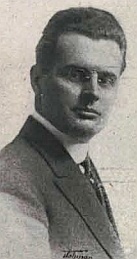
Born: 22 February 1878 Van Wirt, Ohio
Died: 3 March 1943 Puyallup, Pierce, Washington
Frederick Orion Gamble was an accomplished pianist and one of the early artists to record hand-played rolls for QRS, including #40001 Believe Me If All Those Endearing Young Charms. Born in Van Wert, Ohio, his first known role in the music industry was with the player piano department of Denton, Cottier & Daniels in Buffalo, New York. By 1908, he had moved to the Packard Company of Fort Wayne, Indiana, where he was already regarded as an expert demonstrator.
In 1910, Gamble’s reputation took him to Florida, where he accompanied a violinist at the estate of Thomas Edison. By the following year, he was with the Melville Clark Piano Company, serving as manager of their Pacific Coast operations until at least 1914. That year marked a new chapter, as he relocated to Memphis, Tennessee, becoming vice-president and general manager of E. Witzmann & Co.—shortly after marrying the daughter of the company’s founder, Emile Witzmann. He remained there until the company’s liquidation in 1921 to settle the family estate.
The early 1920s saw a flurry of career moves. In 1922 alone, Gamble transitioned from the T. J. Paul Co. in Baltimore, to Reproducing Piano Studios, Inc., and then to the Aeolian Company in New York City. However, he resigned from Aeolian within months, citing ill health—grief no doubt worsened by the tragic loss of his six-year-old daughter just weeks later. By 1923, he had returned to Baltimore to manage the Knabe Studios for Paul Co.
By 1930, Gamble had left the piano industry entirely and reinvented himself as a rancher in Pierce County, Washington. He also served as an inspector for the American National Fox and Fur Breeders' Association. His later years were far removed from his musical beginnings, but his early contributions to the player piano world remain significant.
During his time as a travelling demonstrator and salesman in the 1910s, Gamble maintained a devoted courtship of Mary Louise Witzmann, writing her hundreds of letters—sometimes more than twice a day. These letters were later donated by his son, Fred Jr., to the Memphis Public Library in the 1980s, offering a personal glimpse into the life of a remarkable and passionate figure of the player piano era.
Don F. Heath
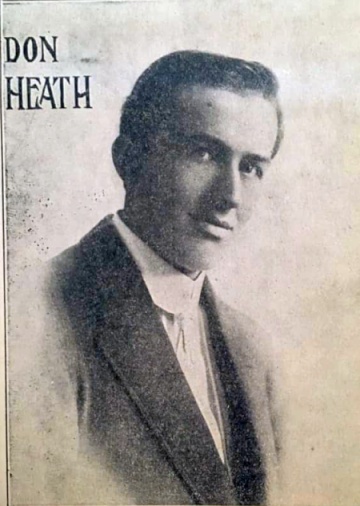
Born: 10 September 1880, Chicago, Illinois
Died: 3 October 1938, Bedford, Virginia
Donald Heath, originally born Donald Heath Gestefeld, was the son of Ursula Newell Gestefeld—a prominent religious writer and founder of the New Thought movement within Christian Science. Steeped in intellectual and spiritual influences from an early age, Heath chose a path in music. As Don H. Gestefeld, he made his operatic debut as a high baritone with the Henry W. Savage Opera Company in New York City and was soon performing at venues like the Theatorium in Wilmington, North Carolina.
By 1910, Heath was living in Charleston, South Carolina with his wife Mary (née Roller) and their young son Don R. That same year, their daughter Ursula was born. He worked as a music teacher and later transitioned into the business side of the industry, managing the New York branch of Tell Taylor’s publishing firm by 1912. He was acquainted with composer George Fairman, and later claimed that a conversation between them about “business down south” inspired Fairman’s hit song Way Down South, which Heath recorded for QRS.
In 1917, amid significant changes, he adopted a new identity—Donald Fields Heath—and was working as “chief inspector” at a chemical plant in Akron, Ohio, a role he still held in the 1920 census. Despite the shift in profession, he remained musically active, directing orchestras and events around Akron and continuing associations with the Tell Taylor company as late as 1922.
By 1919, his whereabouts had become unclear even to his family. An advertisement placed in *Billboard* magazine by “M. Gestfield” of Kenosha, Wisconsin—very likely his mother, Ursula, who was in poor health and died in 1921—sought information on “Don Heath, or Don Gestfield, last heard of as a piano player around Chicago.”
Heath resurfaced in St. Paul, Minnesota in the 1927–1928 period, again working as a musician. He copyrighted a composition titled Sweet You and also served at some point as the organist at the Garrick Theatre in Madisonville, Kentucky. Sadly, a series of strokes in the late 1920s robbed him of his ability to walk or write. In 1928, he became a long-term resident of the Elks National Home in Bedford, Virginia, a retirement and care facility operated by the Elks fraternity for aged or indigent members.
His daughter Ursula predeceased him in 1933, but his son, Don R. Gestefeld, lived until 2007, passing away at the age of 90.
Earl W. Hille
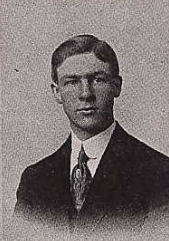
Born: 26 March 1889 Denver, Colorado
Died: 28 July 1958 Montgomery, Kansas
Earl W. Hille recorded just one roll, his own Rubber Heels Rag, aged just 22. This lawyer's son was prominent in musical and dramatic circles at Colorado College, he played their pipe-organ, acted as accompanist for the Glee Club, played for several church choirs, musical performer for the Apollonian Club, and was also a popular comedian and song and dance artist in their musical opera productions.
He graduated as an electrical engineer in 1911 and followed this profession for a few years. He must have made a brief visit to Chicago to record his roll, which was released in November 1912. During the 1910s he also composed and copyrighted a few pieces of music and by 1920 he was a music store owner in Independence, Montgomery, Kansas which he ran with assistance from his wife and five children. He retained this profession until the end of his life, which came in 1958 aged 69. He is buried in Mount Hope Cemetery in Independence, Montgomery County, Kansas.
Jim Harrington
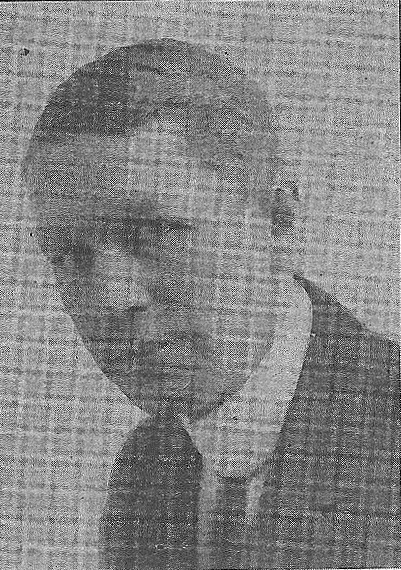
Born: 16 September 1873, Chelsea, Massachusetts
Died: 29 October 1926, Bronx, New York
'James Henry (Jim) Harrington' was the professional name used by the man who, in normal life, was named Hermon Dexter Ladd.
Ladd was a gifted pianist and arranger whose career spanned vaudeville stages, music publishing houses, and recording studios during the golden age of American popular music. Born in Massachusetts, he was the son of Hermon Ladd Sr., a spring bed manufacturer. He married Catherine Frances Wilson in 1893, and the couple had three children.
In his early years, Harrington performed at Austin and Stone’s Museum in Boston’s Scollay Square, a grand venue billed as America’s largest dime museum, offering vaudeville, sideshows, and curiosities. By 1907, he was touring, appearing in a whistling-piano act with Florence Lester at the Family Theatre in Poughkeepsie. The *Eagle-News* praised him as “a skilled pianist” who would “surprise you with what he will make a piano do.”
Amid his wife’s battle with cancer, Harrington sought better prospects in Chicago. In August 1909, he joined the local offices of music publisher Jerome H. Remick, working alongside other future QRS recording artists like Phil Schwartz and Riley McCowan. His wife Catherine passed away in 1910, and he later remarried industry colleague Pearle Mansfield (1893–1927), with whom he co-wrote at least one published song, Cairo Dreams (1921).
In 1912, Harrington moved to the publisher Snyder, and by 1914 he had launched his own business, advertising as a freelance music arranger from the New Gibbons Building. He was also active on the vaudeville circuit, performing in the act “Harrington, Mildred and Lester,” and playing for Keith’s Providence and the Henry Woodruff productions. His 1917 draft card lists him as “musical director – United Booking Office, Palace Theatre,” living at 302 Morris Ave, Bronx, New York. He was described as tall, medium build, with blue eyes and blonde hair.
Throughout the 1910s and early 1920s, Harrington remained active as a composer and arranger in New York. In 1923, *Variety* noted the passing of his mother in its vaudeville column, indicating that he was still a prominent name within the industry. In October 1925, he recorded a test session for Victor Records with Al Bernard and Frank Ferera; however, the recording was ultimately rejected and destroyed.
Harrington died of pulmonary tuberculosis and bronchitis on 29 October 1926 at his home on Grand Avenue in the Bronx. Just six months later, Pearle—his second wife—succumbed to the same illness and was buried beside him at Arlington Cemetery in Delaware, Pennsylvania.
C. C. Jones
Born: 9 June 1883, Creston, Iowa.
Died: 9 June 1931, Los Angeles, California
Clarence Chester Jones was a Chicago-based pianist who recorded early QRS Autograph rolls from July 1912.
Born in Iowa as the son of an English immigrant master mechanic, by 1910 he was present in Chicago and working as a musician for a music house. He married Elizabeth Dorothy Gilbert, four years his junior and the daughter of Swiss immigrants, in Chicago on 24 February 1912.
By the 1917 WW1 Draft he was employed by Waterson, Berlin & Snyder as a pianist, and listed himself as being tall and slender with grey eyes and brown hair, and his next of kin being Elizabeth Dorothy Jones of the same address (3954 Rokeby St, Chicago).
In 1920 he was still resident in Chicago, rooming in Grace Street with his wife and working as an orchestra pianist
By 1930 he had relocated to Los Angeles, working as a theatre musician. He died there on his 46th birthday of epidermoid carcinoma of tongue, survived only by his wife, and was laid to rest in Inglewood Cemetery.
Gertrude E. Max
Born: 15 October 1887, Texas
Died: 5 October 1968, Walnut Creek, California
This San Francisco based pianist was much in demand as an accompanist, and was described as having a 'limpid touch and fluent technique'. Born Gertrude Eleanor Max of a French mother and Russian father (a hotel proprieter), the 1900 census records them resident in the Fort Worth area. She was captured twice in the 1910 census, both boarding in New Orleans and working as a saleslady at a music store and boarding in San Francisco as a musician for a music house. She studied theory, harmony, and composition under W. J. McCoy, and composed a number of songs and also taught.
In 1916 she surprised her 'wide circle of friends' by marrying wealthy and prominent whoesale grocery businessman Albert George Lang, 20 years her senior. At the time she gave her date of birth as 1893, and preferred to use dates between 1891-1893 for the remainder of her life.
Resident in the Palace and Mark Hopkins hotel for a number of years, she was widowed in 1943, and by 1952 was resident at 1000 Mason St.
Riley McCowan
Born: 8 March 1886, Custer, Michigan
Died: 3 November 1952, Paris, Kent, Michigan.
Riley Conrad McCowan was the first non-staff artist to record hand-played rolls for QRS, #100003 and #100004, Oceana Roll and Dahomean Queen Rag, being #3 and #4 released in the hand-played popular series in July 1912. Orphaned early in life, he grew up with his mother and stepfather (a hardware merchant) in Grand Traverse, Michigan.
The first mention of his musical career is a report in a 1902 New York Clipper mentioning him as part of a touring vaudeville act with 'piano and silent act'.
By 1908, he was resident in Chicago, when he married Nance Mildred Oliver. The marriage was apparently not a success, since he remarried Belle Bailey Stevens in November 1924. His QRS recordings date from 1912, at which time he was apparently working for Jerome H. Remick & Co. in their Chicago office, along with fellow QRS recording artists Jim Harrington and Phil Schwartz. A few years later, when filling out his WW1 draft card in 1917, he lists his profession as 'inspector, Eddystone Rifle Co.' and was living in Philadelphia, PA. His first marriage had apparently already failed since his mother is listed as his next of kin. In 1918 he collaborated with the great Haven Gillespie on a patriotic song called 'More Power To Your Knitting, Nell!'.
At the time of his second marriage, he listed himself as a 'merchant'. The 1940 census lists him as an orchestra musician, resident in Grand Rapids, Michigan. By 1930 he was working as an auto salesman in Oceana, Michigan, with Belle and son William F. McCowan (b. 1926). but by 1940 he'd re-entered the music field. By the 1942 draft he was working as a music teacher in Grand Rapids, Michigan. His wife died in 1944, and as late as 1948 he was performing with Danny Noggles And His Swing Band in Holland, Michigan. He is buried at Oak Hill Cemetery.
Prudence Neff
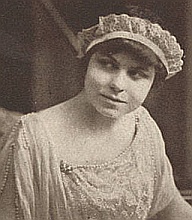
Born: 9 June 1887 Nebraska
Died: 23 December 1949 Chicago, IL
One of the early Autograph roll artists known for her commanding interpretations of heavier classical repertoire, she was of Swiss-German ancestry and the daughter of a railroad engineer in Nebraska.
She married violinist Robert Dolejsi (b. 1894) in Birmingham, Alabama on 24 November 1915. Both were instructors at the Southern School of Musical Art—Robert teaching violin, and she, piano. However, the marriage did not endure.
Her musical accomplishments were significant. She performed with the Russian Symphony Orchestra, as well as with both the Chicago and Minneapolis Symphony Orchestras. She also served as accompanist to noted soprano Florence Hinkle, and taught at two respected institutions: the Chicago College of Music and the Cosmopolitan School of Music.
Later, she married Wade H. Thomas, a window trimmer, and by 1930 was living in Chicago with him and her sister, listing her profession as concert pianist. Thomas passed away in 1933 at the age of just 38. She was notably discreet about her true age in public records, likely due to the age difference between herself and her husbands—both considerably younger.
Until her death, she continued to teach piano privately from her home at 397 Montclair Avenue in Chicago. She is buried at St. Joseph's Cemetery in River Grove, Illinois.
William M. Redfield
Born: 24 May 1867, New York
Died: 27 May 1938, Queens, New York.
William Moore Redfield was a professional arranger who probably never worked directly for QRS, but received credit on many of their 1910s arranged rolls, as these were probably arranged directly from published scores orchestrated by Redfield.
He was born in New York, and the first mention comes in a report of an 1889 state fair in Connecticut, where he is described as "solo cornetist of the noted Colt's Band". He was living in Hartford when he married Orianna in Michigan in 1893 - listing himself as a musician in the register. The family was in Detroit at the time of the 1900 census but by 1905 had relocated to Brooklyn, New York. In 1919, he was appointed manager of the band and orchestra department of C. C. Church & Co., Hartford, Conn. By 1925 both his children were musically involved - Catherine as an opera singer and Henry C. as a musical director, while Redfield describes himself as a musical arranger. Between the two censii he had spent some time as manager of the Eastern Music Co. in Hartford, which was a syndicate that operated the sheet music department in several large department stores. Redfield is described as having been connected with the music business for many years as well as being the leader of the Governor's Foot Guard Band of Connecticut. He also found time to compose music, including Governor's March.
In the 1930 census he specifies Remick Music Corp. as his employer, and his daughter is still at home working as a concert singer on radio. In September 1936 he suffered a tragedy when his son was killed in a New York hotel fire, having fallen asleep while smoking. William himself died two years later, just 3 days after his 71st birthday and was returned to Michigan for burial at Riverside Cemetery, Albion. His wife joined him there in 1952, having outlived their daughter Catherine, who was also interred there in 1945.
William's grandson, also named William Redfield, was a known Broadway performer from the 1930s, transitioning to film and television. His best known role was in 'One Flew Over The Cuckoos Nest', but during filming he was diagnosed with leukaemia and died aged 49 in 1976.
Robert E. Redgate
Born: 18 April 1880, Connecticut
Died: 4 January 1929, Manhattan, New York
Robert Edward Redgate made several early hand-played popular recordings for QRS. He was the son of an Irish immigrant blacksmith, and his brother, George A. Redgate, was also a musician—suggesting a strong musical presence within the family.
By 1917, during the First World War draft registration, Redgate was serving as the musical director of the Van Cortlandt Hotel in New York City.
The final official record of his life appears in the 1925 New York State Census, where he is still listed as a musician. He remained active in his field until his death.
Redgate died of a heart attack at work at the Star Theater, located at 1714 Lexington Avenue in New York City. He was laid to rest in the Moravian Cemetery on Staten Island, New York.
Reynolds, Opal (Mrs Glenn Reynolds)
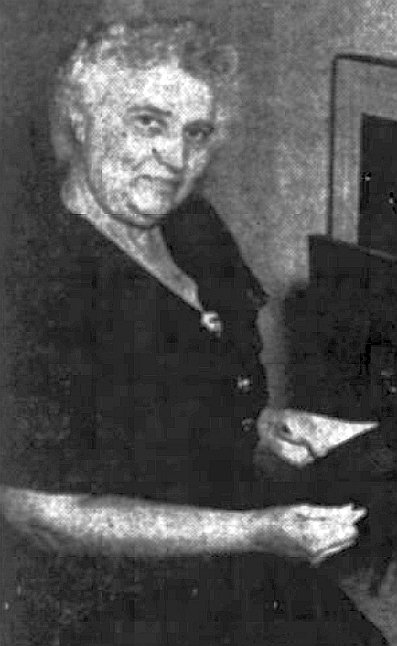
Born: 28 February 1884, Indiana
Died: 12 September 1981, Carlsbad, New Mexico
Opal Reynolds (sometimes credited as 'Mrs Glenn Reynolds") made a few early hand-played rolls of ragtime and popular tunes for QRS.
Born Edith Opal Padgitt, she started her professional career at age 12, playing in a summer resort hotel, the Prospect Heights on the Illinois River at Peoria, and also played several seasons on the City Of Peoria - an excursion boat on the Illinois and Mississippi rivers. She also did hotel orchestral work, and was a pianist with various dance orchestras.
In 1907 she married Glenn Walter Reynolds, a prominent DeKalb citizen who later served for 20 years as Secretary of the DeKalb Chamber of Commerce, and the couple adopted a son, Chester, who also played piano and became a doctor. The couple settled in DeKalb, where, of course, the Melville Clark/QRS concern originated. Her QRS rolls date from approximately 1912-1913.
Continuing her musical career, she was a prominent teacher in DeKalb and also at various times accompanied the Marx Brothers, Blossom Seely, Otis Skinner, and continued her own study under fellow QRS artist Theodora Sturkow-Ryder and also at the Sherwood School of Music in Chicago. In later years her interested included building a substantial record collection and maintaining a large garden. Her photo dates from 1951.
Her husband died suddenly in 1953, but she survived until age 97, passing away at a retirement home in New Mexico.
Harold M. Triggs
Born: 25 December 1900, Denver, CO
Died: July 1984, Thomasville, GA
Harold Melvin Triggs made his roll debut for QRS in January 1917, having only just turned 16. He studied with Josef Lhevinne
He was capable of the heavier repertoire such as Liszt etudes.
His father, Harry A. Triggs, was director of the H. A. Triggs Music Co. in Colorado, which sold pianos, organs, music, and phonographs.
He also demonstrated the Apollo reproducing system in comparison concerts in Chicago in the early 1920s. In 1932 he formed a duo-piano team with Vera Brodsky, whom he had met at the Salzberg festival abroad, and achieved rapid success - Leopold Godowsky was so impressed that he dedicated his transcription of Alt Wien to them. The partnership endured until 1936.
Ernesto Voitier
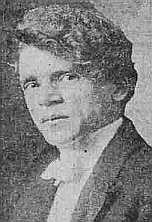
Born:29 February 1872, England
Died:
I have unconvered much information recently about Mr 'Voitier', who was a fraud of epic proportions. Below is the biography as originally written, much of which is now inaccurate. Mr. Voitier was French, the son of a Thomas Voitier and Charlotte Harris or Hanns. He studied with Raoul Pugno in Paris and music theory with Sir John Stainer in London. He made a concert tour of the USA in 1905. He seems to have moved there permanently in aronud 1910, and by early 1911 he was in Chicago with rooms at Kimball Hall, describing himself as having 20 years of experience as a soloist and teacher, and was engaged by QRS in February of that year as an 'expert harmonist and pianist for the elaboration and detail work of the "Department of Musical Expression" in connection with music rolls'. The article also mentioned he was to make his home in DeKalb. In July 1911 an Ernesto Voitier married Belle Marchand/Mershon in Aurora, Illinois and the same parties were divorced in Denver, Colorado on 24 June 1915. In March of that year, an article appeared in local Chicago newspapers speculating on his disappearance and mentioning financial issues and the fact detectives were seeking his assistance with explaining 'certain transactions'. In 1915 Oregon newspapers he's described as the 'European concert pianist who is spending the winter in Portland (with) Mrs. Voitier'.
His wife was also apparently a pianist, as mentioned in yet another article. This is probably Mildred Mack, whom records show marrying an Ernest Voitier in Lake, Indiana on 30 August 1915, just a couple of weeks previously to the sudden burst of Portland newspaper articles. Of Austrian-Bohemian parents, by 1920 she is living with her sister's family in Chicago and describes herself as a music teacher and single - so the marriage may have broken down. This is the final mention of Ernest in US genealogical records, suggesting an early death or departure from the USA.
A review of a concert in the same paper describes him as a 'poet, an idealist, and impressionist.... he plays caressingly, and always with warmth and romantic feeling.. The delicacy of Voitier's piano playing is notable. It is after the whispery, lace-like effects produced by De Pachmann and Godowsky.' and mentions he was taught by Pugno in Paris, had been living in Chicago, and that he had planned to return to Europe but this plan was made impossible by the war and that he was to make his future home in Portland.
Dorian Welch
This name appears on early QRS hand-played rolls and is most probably a pseudonym of Theodora Sturkow-Ryder for her ventures into lighter styles of music, as her name appears as the copyright owner for a 1917 composition by Welch.
Roy Wetzel
Born: 6 March 1895, Grand Rapids, Michigan
Died: 21 December 1991, Chicago, Illinois
Maurice Schwab Wetzel. He also recorded one roll for US, in June 1924 (Rose, a fox-trot composed by Zeph Fitzgerald, a friend of Wetzel's). Hailing from Max Kortlander's hometown of Grand Rapid, Michigan, he was friends with the Kortlander family - and in 1966 QRS recorded a new rag Wetzel had composed called 'Interference - a Ragtime Specialty'. In later years he was also a member of AMICA.
Russ Wildey

Born: 6 August 1898 Chicago, Illinois
Died: 8 March 1964 Garden Grove, Orange, California
Russell N. Wildey recorded just one roll for QRS, #3499 Down Where The Sweet Magnolia Blooms, a waltz released in July 1926. He played the clarinet with Sousa's band during WWI, and was proficient on most instruments, including the ukelele. By 1927, he had teamed with comedian-singer Billy Sheehan as a popular radio duo, known as the 'Ray-O-Vac Twins'. The partnership lasted until mid 1929.
The 1940 Census shows him living in Chicago with second wife Nathalie Colle, who he had married in 1935, and children Janis, Russell Jr., and Robert, and working as a theatre actor. Two more children were to follow later.